Paul Butler · 17 October 2026
How Lunar Cycles Shape Shellfish Harvesting Routines Among Families in Remote Gulf Bay Settlements
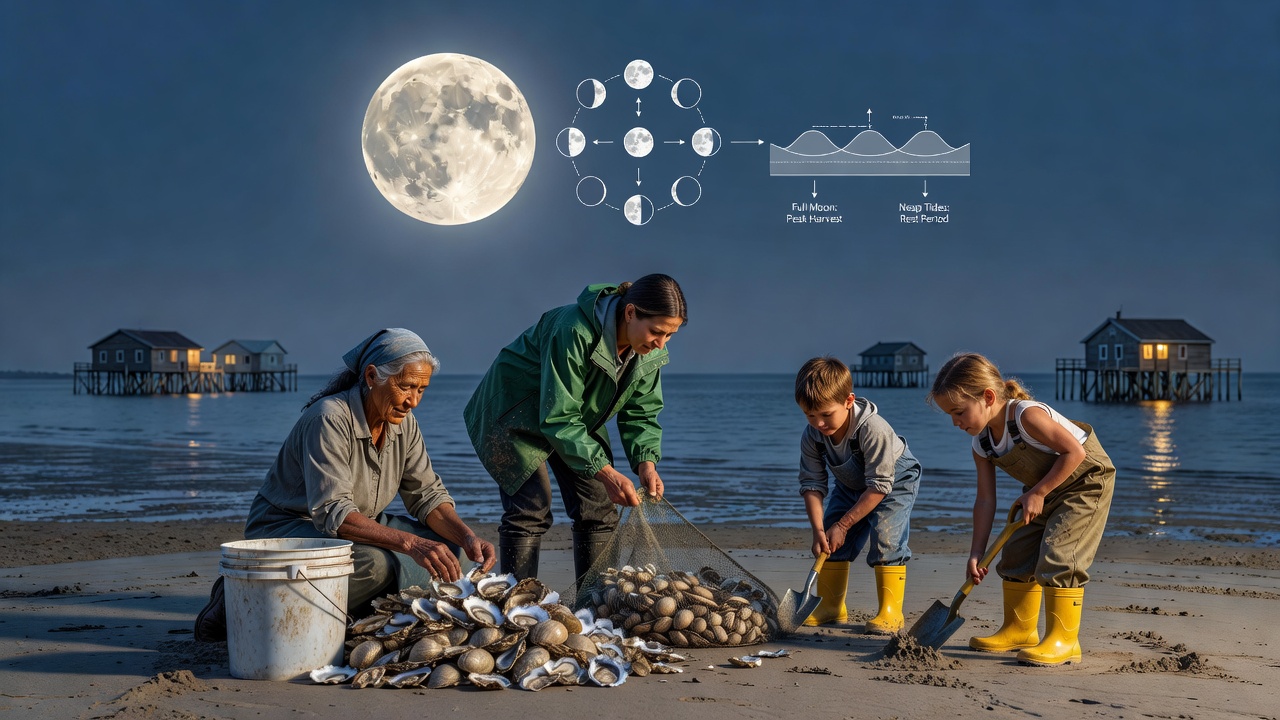
Remote Gulf Bay settlements rely on predictable tidal shifts driven by lunar phases, and families there structure their shellfish harvesting around these cycles to reach beds of oysters, clams, and mussels when water levels drop. Spring tides during full and new moons produce the lowest tides of the month, exposing larger sections of intertidal zones where shellfish cluster, while neap tides create milder fluctuations that limit access to certain areas. Data from tide monitoring stations shows these patterns repeat every 29.5 days on average, giving households a recurring calendar they integrate into daily routines without modern scheduling tools.
Lunar Phases and Tidal Mechanics in the Gulf Region
Gravitational pull from the moon and sun aligns most strongly at syzygy, creating spring tides that can lower water by several feet in shallow bays along the Gulf Coast, whereas quadrature positions produce neap tides with reduced range. Families in isolated settlements track moon visibility and phase names passed down through generations, noting that full moons often coincide with optimal conditions for hand gathering because receding waters leave shellfish beds dry for hours. According to records maintained by the National Oceanic and Atmospheric Administration, peak low tides in October 2026 align with the full moon on the 15th, extending exposure windows in several bay systems and allowing multiple households to coordinate joint outings before sunrise.
Daily Routines Adjusted to Moon-Driven Tides
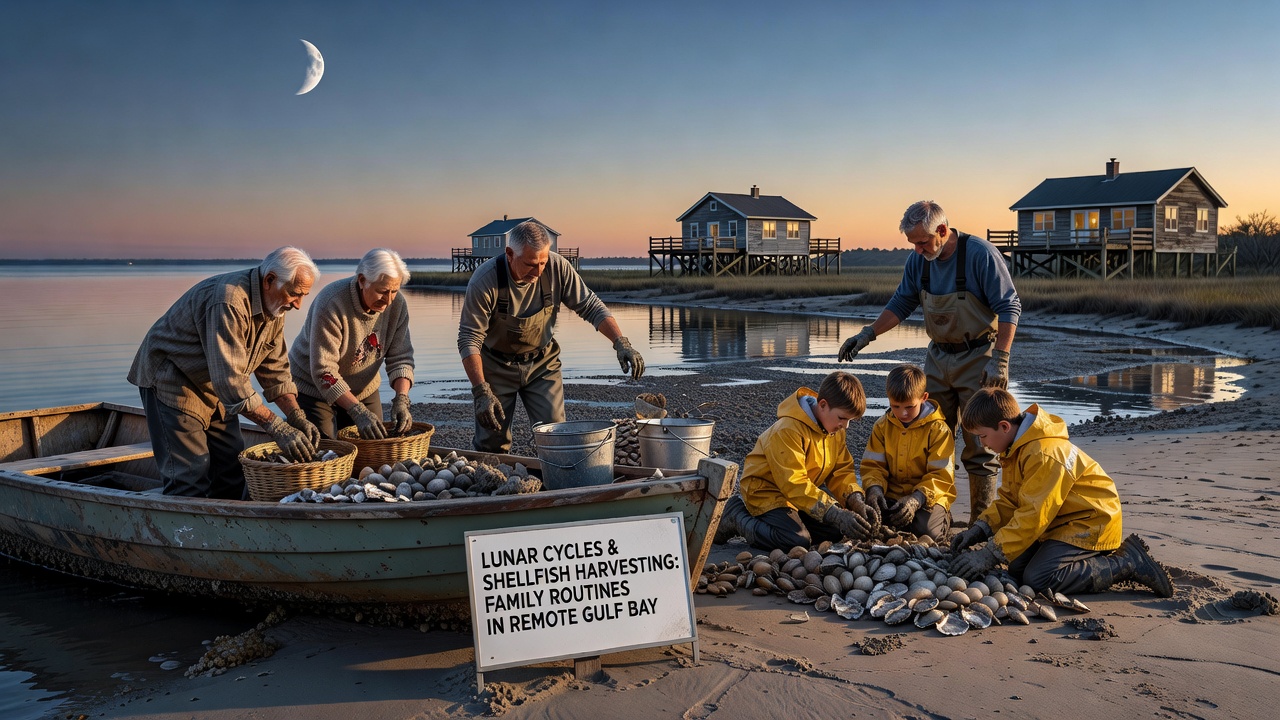
Harvesting starts at dawn or dusk depending on the moon's position, with family members using small boats to reach flats during the brief window when tides fall below average levels. One group in a western Gulf bay settlement begins preparations two days before each full moon, checking wooden tide sticks marked with historical measurements while children assist in sorting gear. These routines incorporate breaks during neap periods when higher water keeps beds submerged, shifting focus instead to net repairs or bait preparation for the next cycle. Research from coastal universities indicates that consistent timing with lunar lows improves catch efficiency by up to 40 percent compared to random scheduling, because shellfish remain in fixed locations once exposed.
Equipment stays simple in these remote spots, including rakes, buckets, and waders suited for muddy bottoms that become accessible only during strong spring tides. Households divide tasks by age and experience, with elders recalling specific moon names tied to past abundant seasons and younger members handling transport across channels that fill quickly once the tide turns. Observations from long-term residents show that ignoring lunar timing leads to reduced yields, since neap conditions leave fewer square meters of harvestable ground above water.
Seasonal Patterns and Community Adaptations
October brings cooler air and water temperatures that slow shellfish metabolism, extending freshness after harvest while lunar lows still provide access windows before winter winds increase. Families compare current conditions against past October records, noting that full moon tides often coincide with post-storm clarity in the water column, making visual location of beds easier. A study conducted by researchers at the University of Texas Marine Science Institute documented how communities adjust departure times by 30 to 60 minutes each lunar month to match advancing low tide peaks, preserving the same total harvest volume year after year.
Weather overlays add another layer, since Gulf Bay winds can delay or hasten tidal movements even when lunar forces remain constant, prompting families to cross-reference moon phase with local wind forecasts available through radio broadcasts. Those who have studied these interactions for decades recognize that combining both factors prevents unnecessary trips when combined effects keep water levels higher than expected. Data shows harvest volumes peak in the days surrounding full moons from September through November, after which shorter daylight limits teh usable window regardless of tide height.
Knowledge Transmission Across Generations
Children learn to read moon phases by accompanying parents on early outings, memorizing which constellations accompany the strongest spring tides for their particular bay. This oral tradition includes stories of past seasons when misaligned harvests forced reliance on preserved stores, reinforcing the practical value of lunar awareness. Community gatherings often feature discussions of upcoming moon dates, allowing neighboring families to share updates on bed conditions without formal organization. Evidence from regional fisheries reports confirms that settlements maintaining these practices sustain higher per-household yields than those shifting to fixed calendar schedules detached from tidal reality.
Conclusion
Lunar cycles continue to dictate the timing and success of shellfish harvesting in remote Gulf Bay settlements through their direct control over tidal exposure, and families adapt daily and seasonal activities around these recurring patterns. Records and observations demonstrate measurable differences in access and volume tied to moon phases, while generational knowledge ensures the information persists without external calendars. As October 2026 approaches with its noted full moon alignment, these routines remain central to sustaining both food supplies and cultural continuity in the region.