Paul Butler · 3 October 2026
Youth Mentorship Programs Reviving Traditional Net-Mending Skills Among Families in Quiet Estuarine Hamlets
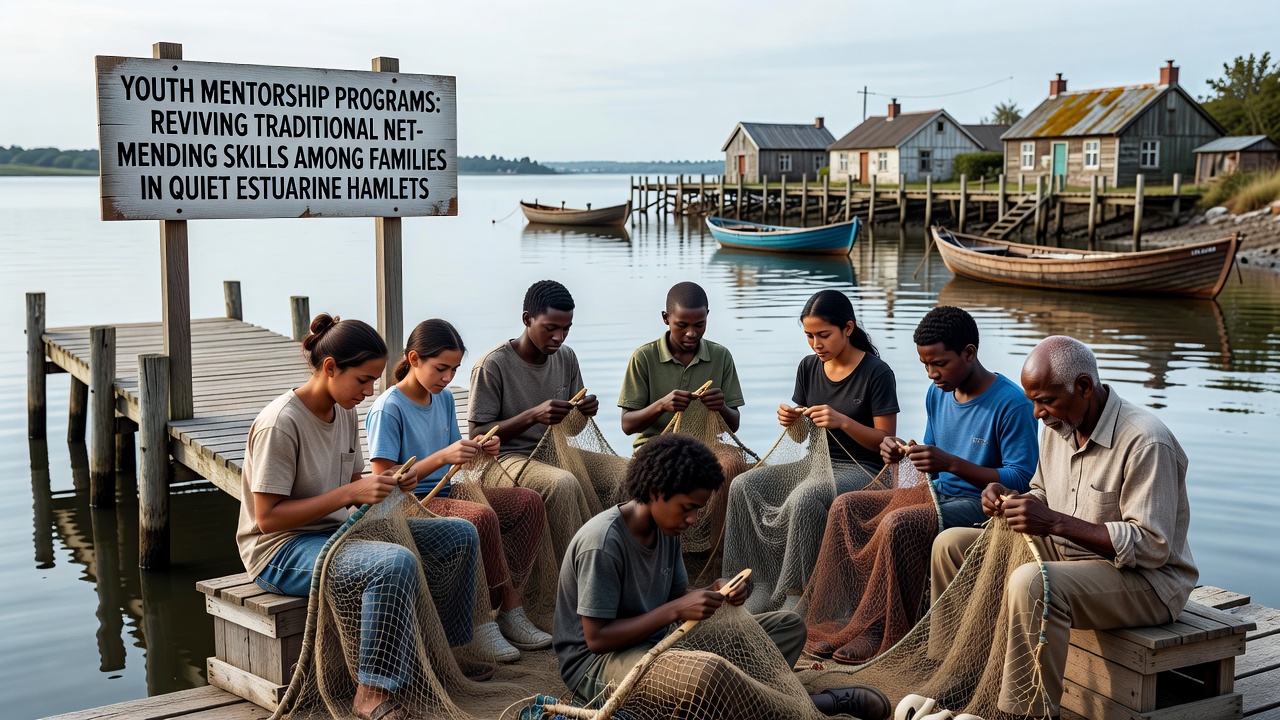
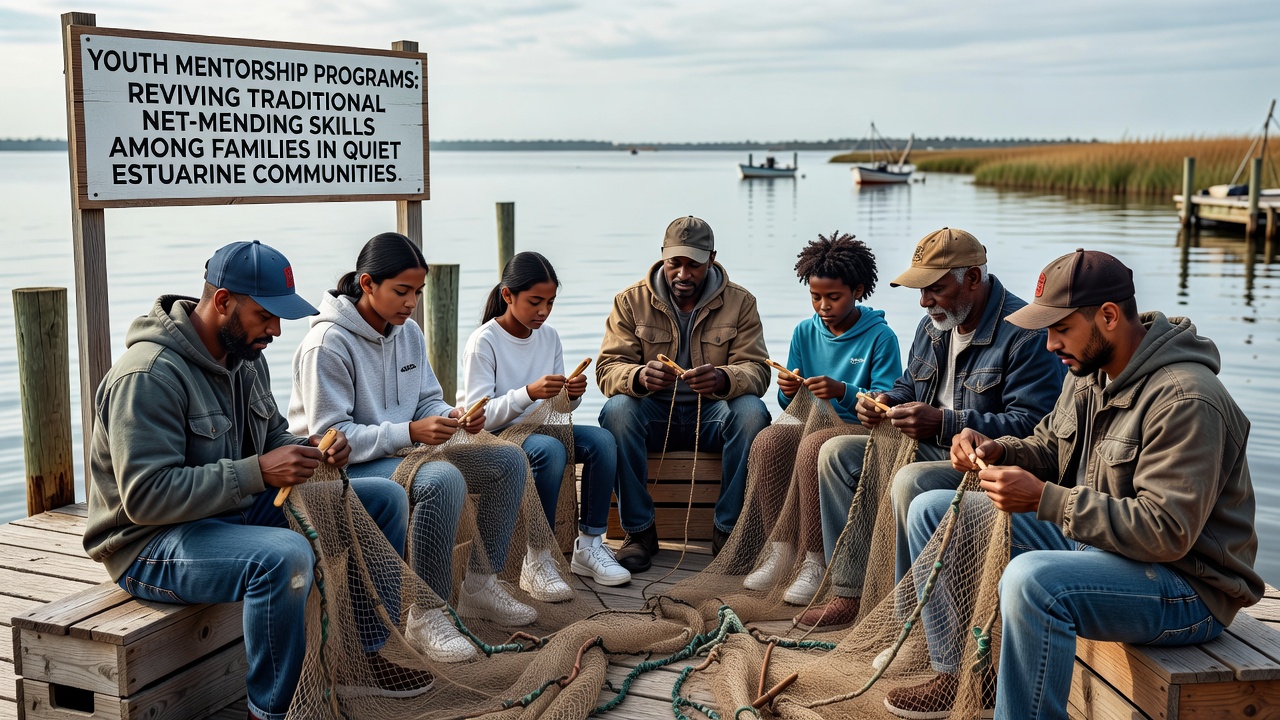
Quiet estuarine hamlets along sheltered coastlines have long relied on handcrafted fishing nets for daily livelihoods, and recent youth mentorship programs now focus on passing those techniques to younger generations through structured family involvement. These initiatives pair experienced elders with children and adolescents in hands-on workshops that emphasize knot-tying patterns, material selection from natural fibers, and repair methods suited to local tidal conditions. Data from regional fisheries records show participation rates rising steadily since 2023, with family groups accounting for most enrollment in small communities where commercial harvesting still forms a primary economic activity.
Programs typically run year-round yet intensify during shoulder seasons when schools schedule breaks, allowing consistent attendance without conflicting with peak fishing periods. Mentors demonstrate sequential steps starting wth basic mesh formation before advancing to tension adjustments that match specific species behaviors in brackish waters. Research from coastal extension services indicates that participants who complete multi-week sessions retain core skills at higher rates than those receiving only classroom instruction, because the practical repetition occurs directly on working docks and family vessels.
Program Structure and Family Integration
Local organizations coordinate with schools and community centers to recruit families, creating cohorts of four to six households that meet weekly for guided practice sessions. Each group receives standardized toolkits containing shuttles, gauges, and twine sourced from sustainable suppliers, while instructors track progress through documented skill checklists rather than formal grades. Observers note that this approach reduces dropout because parents and guardians participate alongside children, turning lessons into shared household routines that continue outside scheduled meetings.
October 2026 marks the start of an expanded enrollment cycle in several hamlets, where new cohorts will incorporate digital mapping tools to record net designs unique to each estuary. These records help preserve variations in mesh size and knot orientation that evolved over decades to suit local current patterns and sediment loads. Figures from participating districts reveal that family-based groups achieve completion rates above 85 percent, compared with lower figures for individual youth programs that lack parental involvement.
Cultural and Economic Context
Net mending historically served as both a practical trade and a form of intergenerational knowledge transfer in estuarine settlements, where seasonal migrations of fish dictated the timing of repairs and replacements. Modern programs integrate this heritage with contemporary safety standards, including proper handling of synthetic twines that resist rot in humid environments. Studies conducted by university marine programs document how revived skills contribute to reduced equipment costs for small operators, since families mend rather than discard damaged gear.
One study revealed that hamlets maintaining active mentorship networks report steadier youth retention in local fisheries compared with areas where such transmission has lapsed. Participants learn to identify wear patterns caused by abrasive substrates and to apply targeted reinforcements that extend net lifespan by weeks or months. This practical knowledge aligns with broader resource management goals tracked by agencies monitoring harvest sustainability.
Regional Variations and Data Trends
Coastal areas in the Pacific Northwest and Gulf regions operate parallel yet distinct models, with the former emphasizing cedar-bark accents in ceremonial nets and the latter focusing on heavier cotton twines suited to stronger tidal flows. According to NOAA Fisheries harvest summaries, communities that sustain these programs maintain higher percentages of locally repaired gear entering the water each season. Australian fisheries research from similar estuarine zones shows comparable outcomes when family mentorship structures receive consistent institutional support.
Training materials incorporate regional species calendars so that mending schedules align with migration peaks, reducing downtime during critical harvest windows. Data collected through port sampling programs indicate measurable improvements in gear efficiency among families that have participated for at least two full cycles. These improvements appear in catch-per-unit-effort metrics tracked over multiple years rather than single seasons.
Conclusion
Youth mentorship programs centered on traditional net-mending continue to expand across estuarine hamlets by embedding skill transmission within existing family networks and aligning with seasonal fishing rhythms. Records compiled through 2026 document consistent participation growth alongside measurable retention of specific techniques that once risked disappearing. External agencies and academic partners supply data frameworks that help communities quantify outcomes without altering the core hands-on character of the work. As enrollment cycles advance, the emphasis remains on practical repetition and shared household responsibility that sustains both cultural continuity and operational viability for small-scale operators.